I sold smoked trout and wild grape jelly at the Wolfeboro farmers market for four summers, and the first year I lost money and told everyone it went great. The second year I did the arithmetic in March instead of October and it went much better. Here’s the arithmetic.
What it costs before you sell anything
Stall fees at a decent market around here run $25 to $60 a Saturday, sometimes a flat seasonal fee of a few hundred dollars. That’s the number everyone knows. The numbers that actually decide whether you make money are the ones nobody mentions at the stall.
Insurance first. Many markets require vendors to carry their own liability coverage, and a market policy runs a few hundred dollars a year. Then the paperwork: in New Hampshire a home kitchen permit for low-risk goods like jams and baked items, and if you’re selling acidified foods like pickles or salsa, the state wants a tested recipe and pH records. Smoked fish is a different animal entirely and I ended up renting time in a licensed commercial kitchen at $18 an hour to stay legal. Budget a couple hundred dollars and a couple of weeks of phone calls before the first Saturday.
Packaging is the quiet killer. A case of eight-ounce jars, lids, labels printed with the batch and the ingredients, shrink bands if you’re fancy. My jelly cost about $1.35 a jar to make and package, and that’s before the fruit. I priced at $8 and felt generous until I added up the season.
Then the equipment: a canopy that won’t fold in the first wind, two folding tables, a cash box, coolers and ice for anything that needs it, a hand truck if the parking lot is far. You can borrow most of it the first year. You’ll own most of it by the second.
What you make, in dollars
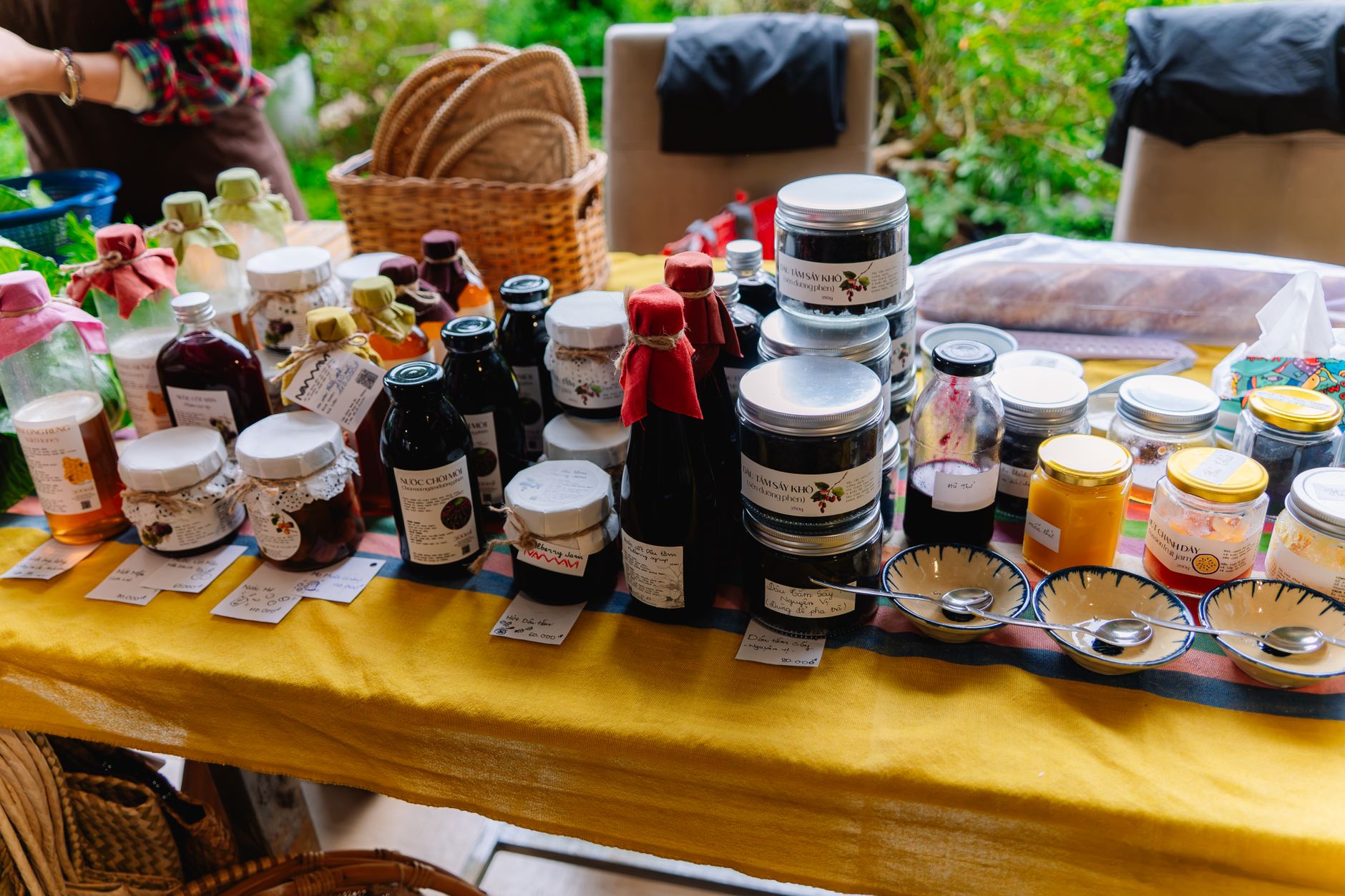
Here’s a representative Saturday from my second season, 2019. I brought 32 jars of jelly, 24 jars of pickled beans, and 12 packages of smoked trout. Sold 26 jellies at $8, 15 beans at $7, and all the trout at $12. Gross take was $353. Stall fee was $35, the smoked trout had $144 of kitchen rental and fish cost behind it, packaging and ingredients across everything ran about $90, and ice and gas were $25. Net was $159, and the market day itself was six hours plus four hours of prep.
That’s $16 an hour on a good Saturday, and I had Saturdays that netted $40.
The margins live in the shelf-stable stuff. Jelly and pickles carry well, keep for a year, and can be made in bulk on a rainy July day. The smoked fish sold out every time and made the least money per hour of anything on the table, because the kitchen clock runs whether you’re selling or not.
Getting paid, which is its own subject
Cash used to be the whole business. I still start every Saturday with a cash box: forty dollars in small bills and quarters, because the person who hands you a fifty for an eight-dollar jar at 9:05 will not thank you for asking for change.
But cash has been shrinking every year, and if you only take cash you’ll watch sales walk away. Card payments are the standard now. The usual setup at a market is a small card reader that pairs with your phone, and it works fine when the cell signal works. Find out what the signal is like at your specific market before you commit to anything, because half the markets I’ve done have one bar in the back corner where the vendors get parked. When mine dropped out I lost two sales to dead terminals before I wised up and started taking cash at a small discount. Those readers and payment apps look simple, but they’re financial products in their own right, usually built on an embedded finance platform so the company behind the app can issue cards and move money without becoming a bank.
The processing percentage matters at these margins. A flat percentage on a $7 jar is a real cost, so know your rate and build it into your price instead of being surprised at the payout. Some vendors add a small card surcharge where the law allows it and some just price it in. I priced it in and raised everything a quarter.
Then there’s the customer who isn’t standing at your table. Every market has a few: the summer people from out of state who want to ship a gift box to relatives in Texas, the Canadian family who asks if they can pay with their own card from home, the guy who wants a case delivered to his condo before he flies back to Europe in September. Those are real sales and real money, and they all run into the same wall, which is taking payment from someone who isn’t in front of you and isn’t in the country. My solution the first two years was to say no and lose the sale. Later I got set up to accept online payments and invoices, and gift-box season in August became a quarter of my year.
The lesson from all of it is boring: decide how you’re getting paid before the season starts. Cash, cards, online invoices for the folks paying from abroad or from the airport, and a way to keep the records straight. The vendors who lose their shirts at market almost never lose it on the product. They lose it on the fees, the packaging, the spoilage, and the sales they couldn’t take.
What I’d tell a first-timer
Price for your actual costs, including your hours. Sell the shelf-stable stuff and use the perishables as the hook that brings people to the table. Take cards and carry change. And do the arithmetic in March, on paper, before you’ve fallen in love with the idea of a market stall.
Fourth summer, I cleared a little over three thousand dollars across twenty-two Saturdays, which paid for the new woodshed and my fishing habit. That’s a real business if you run it like one.