The woodstove has been running since the last week of September and by the middle of February I have made every mistake possible at least twice. That’s what this is: what I’ve learned from twenty-two winters of heating with wood in a drafty New Hampshire farmhouse, written down so my kids can ignore it after I’m gone.
Wood heat is a system. The stove is the part you see. Behind it are six months of cutting, splitting, stacking, and drying, and if any one link is bad, February is when you find out.
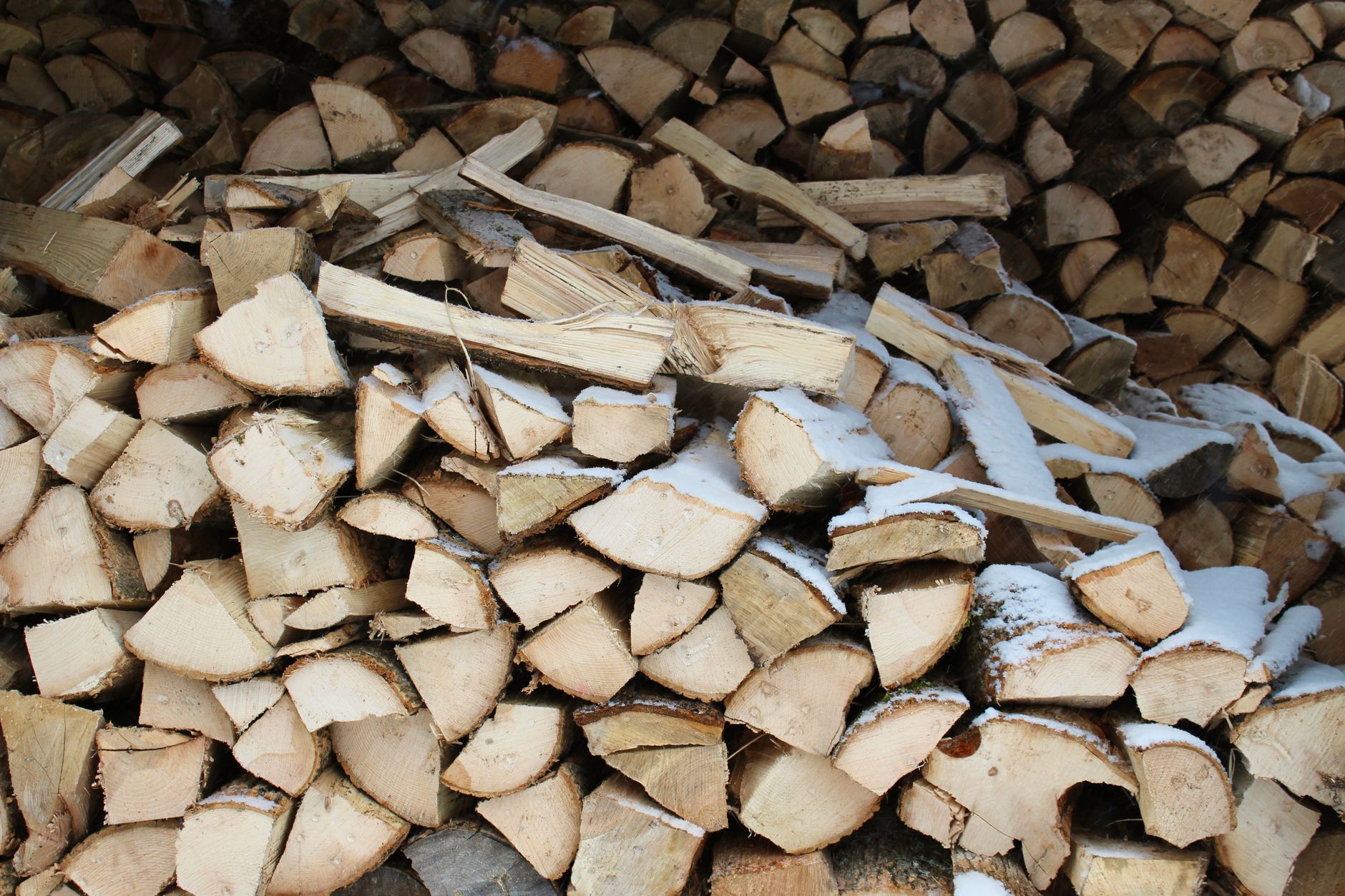
Cord math, which people get wrong constantly
A full cord is 128 cubic feet: four feet high, four feet deep, eight feet long. That’s the legal definition and the only number you should pay by.
The trouble is the “face cord,” which is a stack four feet high and eight feet long but only as deep as whatever length the wood was cut. A face cord of 16-inch wood is 43 cubic feet, a third of a cord. A face cord of 24-inch wood is 64 cubic feet, half a cord. So when a guy on the classifieds sells you “three cords” of 16-inch wood delivered in three loose truckloads, do the arithmetic before you thank him. A full-size pickup with a standard bed holds a bit over half a cord of split wood, stacked, and considerably less when it’s thrown in loose.
How much do you need? For a cold New Hampshire winter in a reasonably insulated house with the woodstove as the main heat, I burn three and a half to four cords. The old farmhouses around here that are the only heat source go through five or six. Buy a cord more than you think you need and you’ll never regret it. You’ll always need it next year.
As for species, hardwoods are the money: oak, maple, ash, birch, beech. Ash splits like a dream and burns clean, and these days there’s a mountain of dead ash everywhere you look. Softwoods like pine and spruce burn hot and fast and throw sparks, which is fine for kindling and shoulder-season evenings and a bad idea for a February night. If you want the BTU numbers by species, firewood has the whole table, and it’s worth a look before you pay for a load of anything.
Drying is the whole game
Green wood is roughly half water by weight. You can burn it, and people do, but what you’re really doing is boiling water in your stovepipe and lining the chimney with creosote while throwing off half the heat.
Split wood needs six months to a year of air drying before it’s worth burning, and species matters less than most arguments about species. A big oak round needs two full years to dry through. A split piece of ash in a breezy stack can be ready in six months. The number that matters is moisture content: below 20 percent is good firewood, and a $20 pin meter will tell you in five seconds. Above 25 percent and you’ll fight the fire all night.
So the plan is simple and I ignored it for years: cut and split this year’s wood next year’s wood. Right now, in February, next winter’s wood should already be split and stacked. In March I start cutting for the winter after that. If you’re buying instead of cutting, buy in spring and stack it yourself. Spring wood bought green and dried all summer is the best money in this whole business.
Splitting and stacking
Split it smaller than you think. A piece that fits in your stove with an inch of air on each side burns far better than one you have to shoehorn in, and smaller pieces dry faster. My rule: if it’s thicker than my wrist, it gets split again.
A maul handles most of it. Six to eight pounds, swung with the grain, and a couple of good plastic wedges for the twisted stuff. I rented a hydraulic splitter for two falls and went back to the maul, mostly because the splitter lives in the shed and I’m not dragging it into the woods. Your back will tell you which tool is right. Mine voted for the maul at forty and for a beer after an hour either way.
Stack it off the ground on pallets or old rails, bark side up if you want the rain to run off, in a place with sun and wind. A woodshed with a roof and open sides is the gold standard. A tarp over the top only, never wrapped around the stack, because a wrapped stack is a compost pile that smells like disappointment. Airflow is what dries wood. Cover the top, leave the sides open, and you’ll be fine.
Running the stove
Burn hot. A hot fire with visible flame is a clean fire; the gases are burning instead of condensing in the chimney. A stove choked down to a slow smolder is where creosote comes from, and creosote is what burns houses down. If you want an overnight fire, load it with enough wood to burn hot and let it go, and open the air back up in the morning before you reload.
Get a stove thermometer, the magnetic kind that sticks on the flue. Run it in the manufacturer’s clean-burn range, usually somewhere around 300 to 600 degrees at the pipe. It costs less than a face cord and it tells you more about your fire than looking at it ever will.
Burn only dry wood and nothing else. No trash, no painted lumber, no pallets with mystery chemicals, no driftwood loaded with salt. Seasoned firewood is what your stove was designed for.
And clean the chimney. Once a year minimum, twice if you burn a lot of softwood or you run the stove damped down at night. I do mine in late October with a brush and a drill, from the roof down, wearing a harness because I’m over fifty and the roof is a metal roof in New Hampshire and I’ve already tested my luck enough.
The February part
Here’s what the system is actually for. It’s a Saturday in February, it’s four degrees out with a wind, and the oil furnace is the backup you’d rather not run. The house is 68 degrees because last April you split an extra half cord when you didn’t feel like it. There’s a kettle on the stove and the cat hasn’t moved in nine hours.
That morning is bought and paid for in July, when the wood came out of the woodlot in the back of the truck and you stacked it in the sun, swearing at the hornets. Every year that’s the trade. Every year it’s worth it, and every February I’m grateful to a version of myself who did the work in weather that suited it.
One more thing: keep a stash of dry kindling and two bundles of fatwood somewhere inside the house. Damp kindling in a cold stove in the dark is where the whole system falls apart. Ask me how I know.